
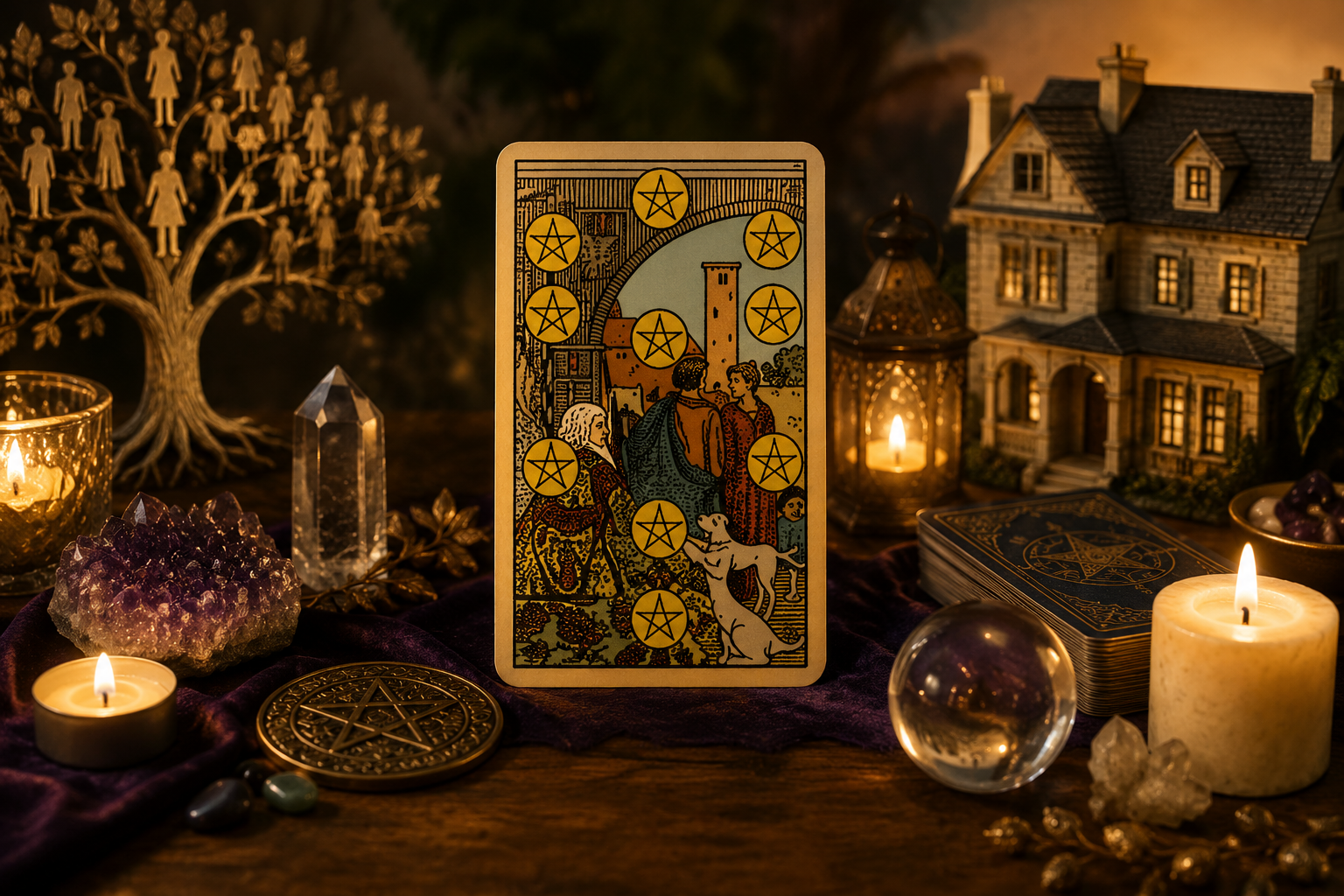
The Tarot Card for Ancestral Property: What the Ten of Pentacles Symbolizes
If you're searching for the Tarot card for ancestral property, the Ten of Pentacles is the card most closely associated with family wealth, inheritance, legacy, and generational abundance. In Tarot, it symbolizes stability, prosperity, and the preservation of family values across generations. While Tarot cannot predict or guarantee legal outcomes, many people use this card as a powerful visual symbol to stay focused on their intentions during family property matters.
For many families, ancestral property is much more than land, a house, or financial assets. It represents family history, cherished memories, traditions, security, and a legacy passed from one generation to the next. Unfortunately, ancestral property matters often remain unresolved for years due to legal complexities, documentation issues, or disagreements among family members.
During such emotionally challenging situations, many individuals turn to spiritual practices like Tarot to maintain hope, emotional balance, and a positive mindset while continuing to take practical steps toward resolution.
Why Is the Ten of Pentacles the Tarot Card for Ancestral Property?
The Ten of Pentacles is widely recognized as one of the strongest Tarot cards representing inheritance, ancestral property, family wealth, and long-term financial stability.
If you'd like a personalized interpretation of how the Ten of Pentacles relates to your situation, consider booking a Tarot Card Reading with Dr. Shefalii Gupta.
Unlike cards that emphasize individual success or short-term financial achievements, the Ten of Pentacles reflects prosperity that benefits an entire family across multiple generations. Traditional Tarot imagery often depicts grandparents, parents, children, and a family home, symbolizing continuity, security, wisdom, and enduring abundance.
This is why many Tarot readers associate the Ten of Pentacles with family legacy, inherited assets, and building something meaningful that lasts beyond one's lifetime.
Rather than focusing solely on money, the card reminds us of the importance of preserving values, relationships, traditions, and opportunities for future generations.
What Does the Ten of Pentacles Symbolize?
The Ten of Pentacles carries a much deeper meaning than financial success alone.
It represents:
• Family wealth and prosperity
• Ancestral property and inheritance
• Generational abundance
• Long-term financial stability
• Family unity
• Security and belonging
• Lasting legacy
• Strong family foundations
For anyone experiencing uncertainty around family property or inheritance, this Tarot card serves as a meaningful reminder to stay grounded, patient, and focused on long-term outcomes.
Can Looking at a Tarot Card Really Help?
Many people use Tarot cards as intention-setting tools rather than as objects with magical powers. Just like a vision board, affirmation card, or inspirational quote, a Tarot card can act as a visual reminder of the future you wish to create. Seeing the same meaningful symbol every day helps reinforce your intentions and keeps your mind focused on positive possibilities.
The Ten of Pentacles does not create reality on its own. Instead, it encourages you to align your thoughts, emotions, and actions with the goals you are working toward.
How to Use the Ten of Pentacles for Manifestation
1. Print or display the Ten of Pentacles card.
2. Place it in the southwest direction, which some spiritual traditions associate with family and stability.
3. Spend a few quiet minutes each day looking at the card with gratitude.
4. Repeat the affirmation:
“I am open to receiving my family's rightful abundance, legacy, and blessings with gratitude.”
Consistency and mindful intention are more important than duration.
If you're interested in learning Tarot professionally and understanding every card in depth, explore the Professional Tarot Card Reading Course.
Remember to Balance Spiritual Practice with Practical Action
While manifestation practices can help cultivate a positive mindset, they should never replace practical decision-making.
If you are dealing with ancestral property matters:
• Seek qualified legal advice.
• Verify property documents.
• Maintain respectful communication with family members.
• Exercise patience throughout the legal process.
Tarot can support emotional resilience, but practical action remains essential.
The Power of Symbols and Intention
Throughout history, people have used symbols to represent hope, faith, purpose, and personal transformation. The Ten of Pentacles can become one such symbol in your daily life.
Whether you view the Ten of Pentacles as a spiritual symbol, a mindfulness tool, or simply a reminder of your intentions, its message remains timeless: true wealth is built through legacy, stability, gratitude, and the well-being of future generations.
Frequently Asked Questions
Which Tarot card represents ancestral property?
The Ten of Pentacles is the Tarot card most commonly associated with ancestral property, inheritance, family wealth, legacy, and generational abundance.
Can the Ten of Pentacles guarantee inheritance?
No. Tarot cards are symbolic tools used for reflection and intention-setting. They cannot predict or guarantee legal or financial outcomes.
Is the Ten of Pentacles a good card for manifestation?
Many people include the Ten of Pentacles in manifestation practices because it symbolizes abundance, family prosperity, and long-term stability.
Can Tarot replace legal advice in property matters?
No. Tarot should never replace professional legal advice. Always consult a qualified legal expert for property or inheritance matters.
Looking for authentic spiritual guidance, healing sessions, crystals, or Tarot consultations? Visit Isekkai to explore our complete range of spiritual services and products.

Comments
This is really, really important & well-spoken. These haters in the responses don’t get it, but I hope that reading your piece may have nudged them in the right direction.
This is really, really important & well-spoken. These haters in the responses don’t get it, but I hope that reading your piece may have nudged them in the right direction.